
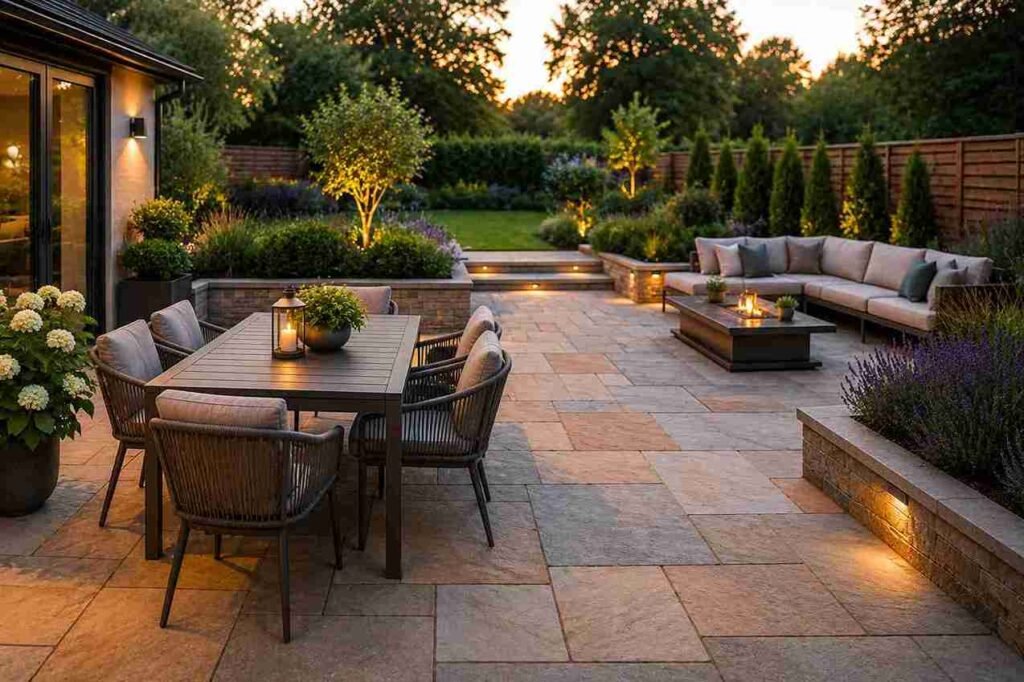
A patio can look impressive on the day it is finished and still prove frustrating six months later. Perhaps water gathers beside the back door. Dining chairs barely fit around the table. Or expensive paving starts moving because the preparation underneath was inadequate. That is why good patio design begins long before the first slab is laid. Professional Patio Design Services in County Durham: homeowners should consider how the garden is used, its levels, drainage, access, paving materials and surrounding landscape. The aim is not simply to create a paved area. It is to build an outdoor space that feels like a natural part of the home.
What Do Professional Patio Design Services Include?
Professional patio design usually starts with understanding the garden rather than selecting paving from a catalogue. A landscaper should assess the available space, existing ground levels and access. They should also consider sunlight, shade, drainage and existing garden features. A family wanting an outdoor dining area has different requirements from a couple looking for a quiet seating space. The designer needs to know how many people will normally use the patio and how they will move between the house, lawn and garden. Appearance matters, but so do durability, maintenance, slip resistance and budget. A well-planned patio balances all these factors instead of allowing one attractive paving sample to dictate the whole project.
How Does the Patio Design Process Work?
Although every garden is different, professional patio planning generally follows six stages.
1. Discuss How You Want to Use the Patio: Start with purpose. Will you use it for family meals, barbecues, entertaining friends, or simply sitting outside with a coffee? These details influence the dimensions and position.
2. Survey the Garden: Accurate measurements are essential. The contractor should also assess access, existing levels, boundaries and features that will remain. This is when potential drainage or excavation challenges can become apparent.
3. Plan the Layout: The patio needs to connect logically with the house and wider garden. Designers may consider paths, steps, planting borders, doors, furniture and transitions between different levels.
4. Select the Paving: Material should suit both the property and intended use. Colour, texture and paving dimensions can significantly change how large or enclosed the finished area feels.
5. Plan Drainage and Groundwork: This is less exciting than choosing stone, but far more important. The installation specification should account for excavation, a stable sub-base, suitable laying methods and surface-water management.
Which Paving Material Is Best for a Patio?
There is no universal winner. The right paving depends on the house, garden, budget and amount of maintenance the homeowner accepts.
Porcelain Paving
Porcelain works particularly well in contemporary gardens. Its consistent dimensions and clean edges can produce a crisp finish beside modern extensions and large glazed doors. It also has relatively low porosity, which can make routine maintenance easier. However, porcelain needs appropriate installation. Buying premium paving and then compromising on the laying method is a poor place to save money.
Indian Sandstone
Sandstone provides natural variations in colour and texture. This makes it particularly effective around traditional homes and established gardens. Each slab can look slightly different, creating a less uniform finish than porcelain. Natural stone may require more ongoing care, so maintenance expectations should form part of the decision.
Concrete Paving
Concrete is often overlooked because people associate it with basic paving slabs. Modern options are far broader. Concrete can provide a practical, attractive patio while keeping material costs controlled. For homeowners working to a defined budget, that can leave more money for planting, lighting or other landscaping features.
| Material | Appearance | Maintenance | Particularly Suited To |
| Porcelain | Clean and contemporary | Relatively low | Modern gardens |
| Sandstone | Natural and varied | Moderate | Traditional settings |
| Concrete | Wide choice of finishes | Moderate | Value-focused projects |
Why Are Drainage and Ground Preparation So Important?
Homeowners naturally notice paving first. Experienced patio installers tend to worry just as much about what sits underneath it. Ground preparation may involve excavation followed by the installation and compaction of a suitable sub-base. The paving then needs an appropriate laying bed and secure edges. The finished surface should manage rainfall without directing unwanted water towards the property. Ignore these details and problems can appear later. Slabs may move. Joints can crack. Sections may settle, and puddles can develop after rain. These faults are particularly frustrating because repairing them can mean lifting attractive paving that still looks perfectly good. The principle is simple: expensive paving cannot compensate for poor foundations.
How Should a Patio Be Designed Around Your Garden?
- Outdoor Dining Areas: Measure the furniture before finalising the patio dimensions. A six-seat table might fit on paper, but chairs need room to pull backwards. People also need space to walk behind them. Access from the kitchen is another practical consideration. Carrying food across wet grass every time you eat outside quickly becomes annoying.
- Small Gardens: More paving does not automatically make a small garden more useful. Covering most of a compact space with hard surfaces can make it feel even smaller. Combining paving with planting often creates better proportions and a softer appearance.
- Sloping Gardens: Sloping sites require more thought. Steps, retaining structures and separate levels may be necessary. Drainage becomes especially important because water naturally follows changes in level.
- Entertaining Spaces: If you regularly entertain, consider where the barbecue, seating and outdoor lighting will go before installation. The patio should support those activities rather than forcing furniture into whatever space remains.
What Should County Durham Homeowners Consider?
County Durham contains a varied mix of properties and gardens. Homes around Durham City can present very different landscaping conditions from properties around Chester-le-Street, Bishop Auckland, Consett or more rural parts of the county. Some gardens have straightforward access from the road. Others require materials and excavation waste to pass through narrow side passages. Older properties may also have existing paths, walls or drainage features that need to be incorporated into a new design. Exposure is another consideration. An open garden can feel quite different from a sheltered urban plot. This is why reliable patio design in County Durham should begin with a site assessment. Local experience is useful, but assumptions should never replace inspecting the actual garden.
How Much Do Patio Design and Installation Services Cost?
There is no meaningful single price for every patio. The final quotation can depend on:
- Patio dimensions
- Paving material
- Existing surface removal
- Excavation requirements
- Ground conditions
- Access
- Waste disposal
- Drainage
- Steps and level changes
- Retaining structures
- Borders and complex cuts
This is also why comparing quotes solely by their final figure can be misleading. One contractor may include excavation, waste removal and finishing work. Another apparently cheaper quote may exclude them. Ask for a detailed written specification and compare like with like. A site-specific quotation will always tell you more than a generic square-metre estimate.
How Do You Choose a Patio Designer in County Durham?
Start by looking at relevant completed projects. A contractor may have an impressive landscaping portfolio, but you want evidence of experience with patios similar to yours. Then look deeper. Check whether the quotation explains the groundwork and drainage. Ask which laying method will be used. Confirm whether waste removal is included. It is also sensible to ask about public liability insurance, workmanship guarantees and realistic project timescales. Perhaps most importantly, ask the contractor why they recommend their proposed solution. A good designer should be able to explain why a certain paving material, layout or drainage approach suits your garden. That explanation often reveals more expertise than a gallery full of photographs.
What Patio Design Mistakes Should You Avoid?
Several mistakes appear repeatedly in poorly planned patio projects:
- Choosing paving before deciding how the space will function
- Making the patio too small for furniture
- Paving too much of a compact garden
- Ignoring surface-water drainage
- Compromising on sub-base preparation
- Choosing materials purely by appearance
- Forgetting about steps and changing levels
- Planning lighting after construction
- Ignoring future maintenance
One rule captures most of them. Design a patio from the ground upwards, not from the paving catalogue downwards.
Is Professional Patio Design Worth It?
For many projects, yes, but homeowners do not always need an elaborate design package. Professional planning becomes particularly valuable when a garden slopes, access is restricted, or drainage requires careful consideration. It also helps when several materials, steps, retaining structures or different outdoor zones need to work together. A simple patio on a level and accessible site may require less design work. The purpose of professional design should be to solve genuine problems and improve the finished garden, not to add unnecessary complexity.
Create a Patio That Works With Your Home
The best patio is rarely determined by the most expensive paving. It comes from good proportions, suitable materials, sound foundations and careful drainage. It should connect naturally with the house while providing enough room for the activities that matter to the household. When comparing Patio Design Services County Durham, look beyond attractive photographs. Ask how the patio will be prepared, drained and integrated with your garden. A well-designed patio should still feel right years after installation. If you are planning a new patio, Landscapers Durham can help assess your garden, explore suitable materials and develop a layout based on how you want to use your outdoor space.
Frequently Asked Questions
What Is Included in Professional Patio Design Services?
Professional services can include a site assessment, measurements, layout planning, paving selection, drainage considerations, groundwork specifications and planning for steps, borders and surrounding landscaping.
Which Paving Is Best for a Patio in County Durham?
Porcelain, sandstone and concrete are all suitable options. The best choice depends on the property’s style, budget, intended use and preferred level of maintenance.
How Long Does a New Patio Take to Install?
Installation time varies according to patio size, access, excavation, weather, material choice and design complexity. Your contractor should provide a project-specific estimate after assessing the site.
Does a Patio Need Drainage?
Yes. Patio levels should manage rainfall safely and prevent unwanted standing water or runoff towards the property.
Can You Build a Patio in a Sloping Garden?
Yes. Sloping gardens can incorporate steps, retaining features and different levels. They usually require more detailed planning for groundwork and drainage.
Do I Need Planning Permission for a Patio?
Many ordinary ground-level domestic patios do not require planning permission. However, listed properties, substantial terracing and unusual site conditions can require additional checks.
How Do I Choose a Patio Contractor in County Durham?
Compare previous work, detailed written quotations, insurance, guarantees and groundwork specifications. A reliable contractor should also clearly explain why their proposed design suits your garden.

