
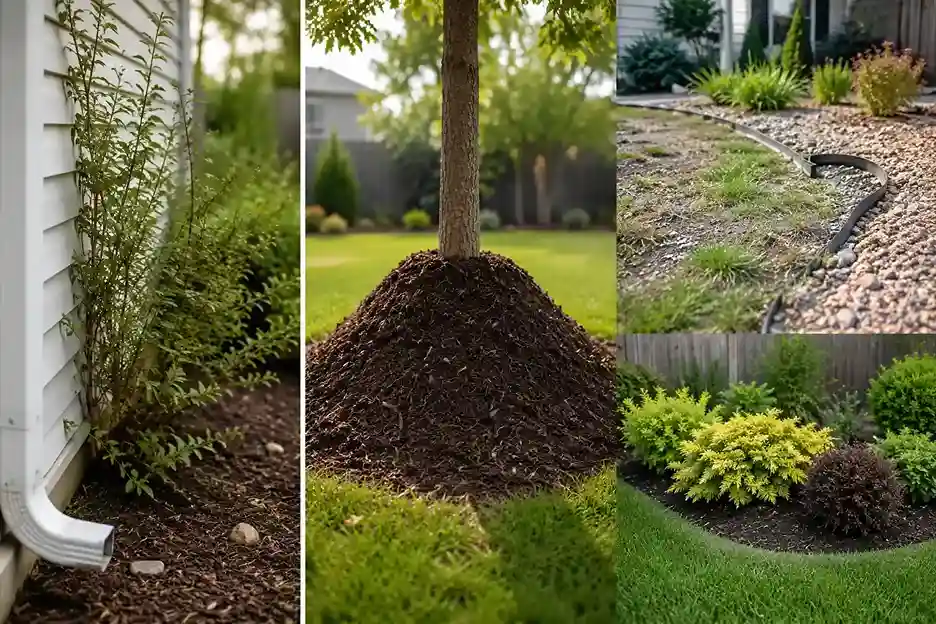
Be honest — how many times have you started a garden project full of enthusiasm, only to look at it a year later and think, What went wrong? The patio’s sinking. The lawn’s patchy. The plants you fell for in the garden centre are barely hanging on. You’re not alone, and it’s rarely down to bad luck. Most landscaping problems come from a handful of mistakes that get repeated again and again — and in Durham.
Our cold, wet North East climate punishes those mistakes harder than most places in England. We’ve spent years fixing other people’s well-meaning mishaps across County Durham, so we know exactly where things go wrong. Here are the most common landscaping mistakes Durham homeowners make — and how to avoid them.
1. Skipping the Plan
It’s tempting to crack on with a load of slabs or a few plants from the garden centre, but an expert landscaping service without a clear design is like building an extension without architect’s drawings. You end up with a patio that’s the wrong size, a lawn that’s awkward to mow, and beds in places nothing will grow. A simple sketch costs nothing and saves a fortune. Walk your garden, watch where the sun hits, see where water collects after rain, and plan around real life — not a Pinterest board.
2. Ignoring Drainage and Water Run-Off
Durham sees around 182 rainfall days a year, so drainage isn’t optional — it’s essential. Yet it’s one of the most overlooked parts of any garden project. Patios laid flat (instead of on a proper fall of at least 1:60) end up holding puddles, then cracking in the frost. Lawns laid over compacted clay turn into bogs. Borders without proper edging let water wash soil onto your paving. Before any work begins, the question should always be: where will the water go? A good landscaper plans drainage first and pretty surfaces second.
3. Choosing Plants That Hate Our Climate
This one breaks hearts every spring. You buy a beautiful Mediterranean shrub in May, plant it proudly, and watch it die in its first hard Durham winter. The North East has a properly cold climate — frost falls on a meaningful number of nights from November through April, and snow on around 14 days a year. The Royal Horticultural Society has excellent guides on hardy planting, but the rule of thumb is simple: choose plants suited to the British climate and, where possible, ones already thriving in local gardens. Hardy perennials, native shrubs, and proven evergreens will reward you for years. Tender exotics will break your heart and your wallet.
4. Cutting Corners on the Sub-Base
Here’s a mistake we get called out to fix constantly. A patio or driveway is only as good as what’s underneath it. Skimping on the sub-base — using too-shallow hardcore, poor compaction, or no slurry primer under the slabs — is the single most common cause of paving failure in Durham. When winter water freezes inside a weak base, it expands and lifts everything. Slabs crack. Joints fail. The whole patio pops loose. Industry standards like BS7533 exist for a reason. A proper sub-base, full mortar bedding, and a slurry primer on every slab cost a little more upfront and save you a complete relay later.
5. Forgetting About Maintenance
Beautiful gardens need looking after, and the mistake here goes both ways. Some homeowners design ambitious schemes they don’t have time to maintain, then watch them become overgrown within two years. Others go too far the other way — covering everything in gravel or artificial grass and ending up with a garden that feels sterile and lifeless. Be honest about how much time you’ll genuinely give your garden. If the answer is not much, a well-designed low-maintenance garden with hardy planting and quality hard landscaping is a smarter choice than a complicated scheme you’ll resent.
6. Ignoring Japanese Knotweed and Problem Weeds
If you see strange bamboo-like shoots appearing in spring, don’t ignore them. Japanese knotweed is a serious legal and structural issue in the UK, and it’s present across the North East. Treating it requires specialist help — and if you sell your home with it untreated, you could be liable. The same goes for letting brambles, bindweed, or ground elder establish themselves. Tackle weeds early, before they take hold.
7. Hiring an Uninsured Landscaper
We’ve said it before, and we’ll keep saying it. If a landscaper can’t show you proof of insurance, walk away. Here’s what’s at stake:
- You could be held liable if a wall collapses, machinery damages a neighbour’s property, or a worker is injured on your site.
- The cheap quote gets expensive fast — uninsured jobs often cost far more once something goes wrong.
- Quality usually suffers too — landscapers who skip insurance often skip other standards as well.
- A reputable team will gladly show proof of public liability cover, so always ask before work begins.
Protecting your home starts with hiring people who protect themselves first.
8. Choosing the Wrong Materials for Durham’s Weather
A stone that looks stunning in a southern showroom can fail miserably in a Durham winter. Honed or polished slabs become dangerously slippery in our wet months. Untreated softwood fencing rots faster than people expect. Porous paving without proper sealing develops cracks in the freeze-thaw cycle.
Choose materials with the local climate in mind — frost-resistant paving (like quality porcelain or granite), pressure-treated timber, and textured, anti-slip finishes for safety. If you’re weighing paving options, our guide to the best patio stones for Durham goes into real detail.
9. Trying to Do Everything Yourself
There’s nothing wrong with rolling up your sleeves — gardening is genuinely rewarding. But there’s a line between sensible DIY and projects that really need professional input. Major patio installations, retaining walls, drainage works, and full garden redesigns involve real groundwork, weight calculations, and skills that take years to learn. A saving on labour often turns into a much bigger bill when things have to be redone. Know what you can confidently tackle, and know when to call in someone who does this every day.
How to Get It Right the First Time
The good news? Every mistake on this list is completely avoidable with a bit of planning and the right team behind you:
- Plan before you dig — sun, drainage, and real-life use first; pretty surfaces second.
- Build for Durham’s climate — frost-resistant materials, hardy planting, and a proper sub-base.
- Hire fully insured experts — and ask for proof before any work begins.
Get these right, and you won’t be fixing your garden in three years — you’ll be enjoying it.
Plan It Right with Landscapers Durham
At Landscapers Durham, we’ve spent years helping homeowners across County Durham avoid these costly mistakes — and putting things right when others have got it wrong. We’re fully insured, locally experienced, and we treat every project as bespoke, because no two gardens are the same. Whether you’re planning a brand-new garden, fixing problems with an existing one, or just want honest advice before you start, we’re here to help. Get in touch with Landscapers Durham today for a free, no-obligation site visit. Let’s make sure your garden’s done right the first time.
Frequently Asked Questions (FAQs)
What is the most common landscaping mistake in Durham?
Skipping the planning stage. Without a proper design that accounts for sun drainage and real-life use even expensive gardens fail within a few years.
Why do patios crack so often in Durham?
It’s the freeze-thaw cycle. Water seeps into a poor sub-base or porous slabs, freezes in winter, expands and cracks everything. Proper installation prevents it.
Which plants survive Durham’s winters best?
Hardy perennials, native shrubs, and proven evergreens. Avoid tender Mediterranean plants — they rarely make it through their first frost.
How do I check if a landscaper is fully insured?
Simply ask for proof of public liability insurance before any work begins. Any reputable landscaper will be happy to show it.
Can I fix landscaping mistakes without starting over?
Often, yes. Drainage, planting, and surface issues can usually be repaired without a full rebuild — but get an honest assessment from an experienced landscaper first.

