
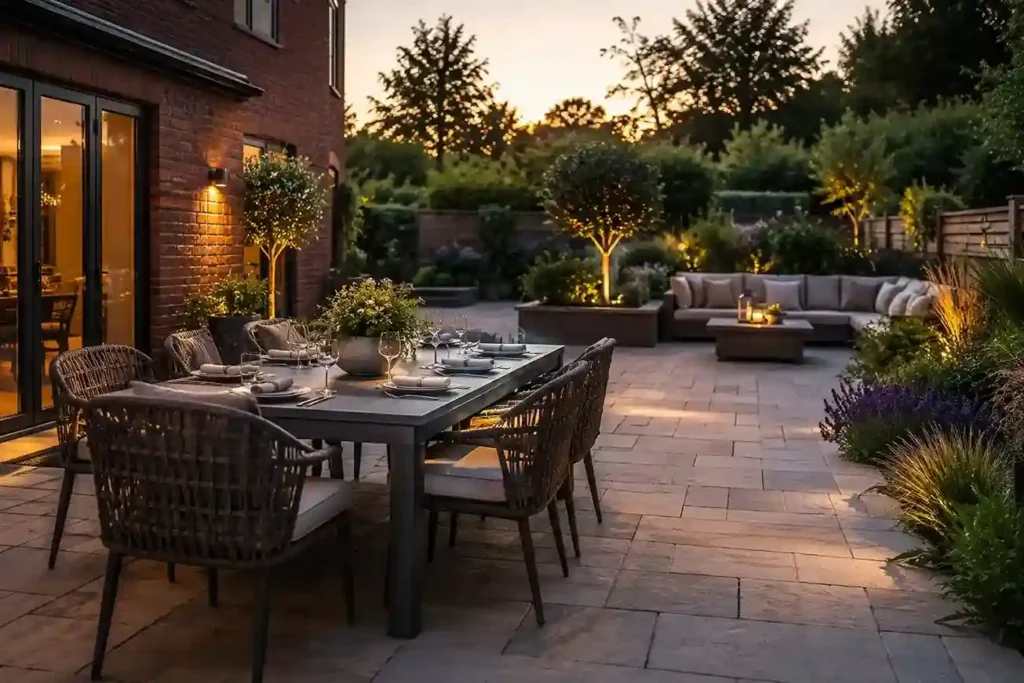
A good patio changes how a garden is used. It stops being the space you look at through the kitchen window and becomes somewhere you actually spend time. For County Durham homeowners, that often means creating a comfortable place for Sunday lunch, an evening drink, summer barbecues or a quiet morning coffee. Yet the best patio for entertaining is rarely the biggest or most expensive one. The best outdoor patios in County Durham combine practical paving, sensible drainage, comfortable furniture and a layout that suits how people really move around a garden. If dining and drinks are the priority, design should start with everyday use rather than choosing paving purely because it looks attractive in a brochure.
What Makes a Good Outdoor Patio for Dining and Drinks?
A successful dining patio needs enough space for people to sit, move chairs and walk around the table comfortably. That sounds obvious. It is also where many designs go wrong. A six-seat dining table may technically fit into a small paved area. Once chairs are pulled out, however, guests can find themselves stepping onto flower beds or squeezing past one another.
For comfortable outdoor dining, think about:
- table and chair dimensions
- circulation space around furniture
- access from the kitchen
- evening sunlight
- prevailing wind
- drainage
- lighting
- nearby planting
- barbecue or outdoor cooking areas
Start with the furniture arrangement. Then build the patio around it. That approach usually creates a more useful garden than paving a convenient rectangle and deciding what to put there afterwards.
Which Patio Style Works Best for County Durham Gardens?
There is no single best style. The right design depends on the property, garden proportions and how the patio will be used.
Porcelain Patios for Contemporary Dining Areas
Porcelain paving has become a popular option for modern gardens. Its clean edges and consistent colouring work particularly well beside contemporary extensions, large glazed doors and modern garden furniture. Porcelain is also relatively low in porosity. That can make routine cleaning easier compared with some natural stone surfaces. One important detail is installation. Porcelain needs an appropriate laying method and good preparation beneath the surface. Choosing premium paving while reducing the groundwork budget is rarely sensible. The attractive part is only the top layer.
Indian Sandstone for Traditional Gardens
Natural sandstone works well when homeowners want a softer, less uniform appearance. Variations in colour and texture can complement brick properties, stone walls and established planting. It can also suit gardens where a highly polished contemporary surface would feel out of place. A mixed-size layout can make larger dining areas feel less rigid. However, natural stone requires suitable care. Homeowners should understand sealing, cleaning and joint maintenance before choosing the material.
Concrete Paving for Practical Family Patios
Concrete slabs should not automatically be dismissed as the budget option. Modern concrete paving comes in many finishes, sizes and shades. A simple concrete patio can create an effective dining area when the layout, borders and planting are handled well. This makes it useful for family gardens where practicality matters more than creating a high-end architectural finish. Money saved on decorative paving can sometimes be better invested in drainage, furniture or planting. That is often a more sensible trade-off.
Where Should an Outdoor Dining Patio Be Positioned?
The obvious answer is directly outside the back door. A patio beside the kitchen makes carrying plates, drinks and barbecue supplies much easier. It also creates a natural transition between indoor and outdoor living. But not every garden behaves the same way.
Follow the Sun Before Choosing the Position
Watch the garden during different parts of the day. A patio beside the house may receive excellent morning sun but sit in deep shade by early evening. If you mainly want the space for drinks after work, another part of the garden may perform better. West-facing areas often catch later sunlight, although surrounding houses, trees and walls can change this significantly. The best location is therefore determined by the individual garden, not simply its compass direction.
Think About Wind and Exposure
Some County Durham gardens are more exposed than others. Open plots, elevated properties and gardens facing surrounding countryside can feel noticeably different from sheltered urban gardens. Walls, fences, planting and pergolas can help create shelter without completely enclosing the dining space. The goal should not be to block every breeze. A patio still needs to feel connected to the garden.
How Large Should a Patio Be for Outdoor Dining?
For dining, the patio should comfortably accommodate the furniture with usable space around it. A small bistro table for two needs far less room than a six or eight-seat dining set. Do not measure the table alone. Pull each chair into the position somebody would use when sitting down. Then allow enough space behind it for another person to pass. This simple test catches one of the most common residential patio mistakes. It also helps decide whether you genuinely need more paving. Bigger is not always better. A vast paved area can dominate a modest garden and remove planting that previously softened the property. Smaller, well-proportioned outdoor patios in County Durham can feel more inviting when they are framed by beds, grasses, herbs or low planting.
What Patio Features Make Outdoor Entertaining Easier?
Outdoor Lighting: Good lighting extends the time you can use the patio. Wall lights near the house can handle practical tasks. Softer garden lighting can then highlight planting, steps or pathways. Avoid turning the patio into something resembling a floodlit car park. Several lower-level light sources usually create a more comfortable atmosphere than one very bright fitting.
Built-In Seating: Built-in benches can work well around patio edges, especially where space is limited. They reduce the number of loose chairs required and can help define the dining zone. Add weather-resistant cushions when the patio is being used.
Planting Around the Patio: Planting stops hard landscaping from feeling isolated. Lavender, ornamental grasses, herbs and structured evergreen planting can soften paving edges while contributing scent and texture. Be careful with very large plants immediately beside dining furniture. Nobody wants to spend dinner fighting a shrub for their chair.
Space for a Barbecue: If outdoor cooking is important, plan its position early. Keep the barbecue close enough to the dining area to be convenient but away from narrow walkways, doors and seating. A dedicated paved section can also prevent cooking equipment from taking over the main dining space.
Which Patio Layout Is Best for Drinks and Relaxing?
Not every patio needs a large dining table. Some homeowners use their gardens more for coffee, cocktails and informal evenings than formal meals. In that case, lounge seating may be the better starting point. An L-shaped outdoor sofa, two chairs and a low table can create a more relaxed arrangement. Surrounding planting makes the area feel less exposed. Larger gardens can support two zones. For example, a dining table could sit closer to the kitchen while relaxed seating occupies a quieter corner. This creates different uses without needing completely separate garden structures.
How Important Is Patio Drainage?
Drainage is one of the least glamorous parts of patio design and one of the most important. The surface needs suitable falls so rainwater moves away rather than sitting across the paving or travelling towards the property. Government guidance encourages paved areas to manage rainfall carefully through measures such as permeable surfaces, planted areas and appropriate drainage. The guidance specifically notes that these principles can also apply to patios around the home. Drainage should therefore be considered before paving starts. Trying to solve standing water after a patio has been completed is considerably less convenient.
Do You Need Planning Permission for a Patio?
For a typical house in England, paving around the home at or near ground level generally does not have an area restriction requiring planning permission. However, significant embanking or terracing may require an application. Listed buildings and some other types of property also have additional considerations. The Planning Portal recommends checking the individual circumstances of the property before major work begins. Rules for paving a front garden are different. For front gardens, impermeable surfaces covering more than five square metres can require planning permission unless water drains to a permeable area. For unusual sites, listed properties or substantial level changes, checking with the relevant planning authority before work starts is sensible.
What Are the Most Common Outdoor Patio Design Mistakes?
The mistakes that cause frustration are usually practical rather than decorative. One is making the dining area too small. Another is choosing paving before considering drainage or access. Other common problems include placing a dining table where it receives little useful sunlight, installing steps in awkward positions and creating too much hard landscaping for the size of the garden. Then there is furniture. It is surprisingly easy to design an attractive patio on paper and discover that a large dining set blocks the route from the kitchen to the lawn. Design around movement first. Finishes come afterwards.
How Can You Make a County Durham Patio Feel More Inviting?
Think beyond slabs. The most enjoyable patio spaces usually combine several materials and layers. Stone or porcelain provides the practical surface. Planting adds softness. Timber furniture adds warmth. Lighting gives the space atmosphere after sunset. A pergola can add definition to a larger seating area. Planters can bring greenery closer to the table. A small herb bed near the kitchen can connect cooking with the garden. None of these features needs to be complicated. The strongest designs often feel effortless because every element has a clear purpose.
Choosing the Right Outdoor Patio for Your Home
The best outdoor patios in County Durham are designed around people rather than paving. Decide how many people normally use the space. Think about when you spend time outdoors. Watch where the sun falls. Consider the journey from the kitchen and give serious attention to drainage and ground preparation. Porcelain can deliver a crisp contemporary finish. Sandstone brings natural character. Concrete offers practical value.
Each can create an excellent dining patio when it suits the property and is installed correctly. For homeowners planning a new outdoor dining or entertaining area, a professional site assessment can help establish suitable levels, materials, drainage and dimensions before work begins. A patio should do more than make the garden look finished. It should give you a reason to go outside, pour a drink and stay there a little longer.
Frequently Asked Questions (FAQs)
What is the best paving for an outdoor dining patio?
Porcelain, sandstone and concrete can all work well. The best choice depends on budget, property style, maintenance expectations and the desired finish.
How big should a patio be for six people?
Allow space for the table, fully pulled-out chairs and comfortable movement around them. Measure the actual furniture rather than relying on table dimensions alone.
Where is the best place to position a patio?
A position near the kitchen is convenient for dining, but sunlight, shade, wind and garden views should also influence the final location.
Does an outdoor patio need drainage?
Yes. Correct levels and drainage help prevent standing water and reduce the risk of rainwater being directed towards the house.
Can I have more than one patio area?
Yes. Larger gardens can use separate areas for dining and relaxed seating, provided the layout still leaves enough lawn, planting and comfortable movement between zones.

